South London Bowing Wall Repairs
AWT are the Bowing Wall Repair Specialists in London
AWT are the Bowing Wall Repair Specialists in London
A bowing or bulging wall is not a cosmetic problem. It is a structural one.
When the outer “leaf” or layer of a brick wall begins to move outward, whether slowly over years or more visibly in a short period, it means the masonry has lost restraint, and the movement will continue until the cause is addressed.
Action Wall Ties has repaired bowing walls across South London for over 30 years. Gable walls, front elevations, flank walls on terraces, rear extensions, etc. AWT’s surveyors see every variation of this defect every week across London’s SE and SW postcodes.
Whatever the cause, there is little we have not encountered and resolved.
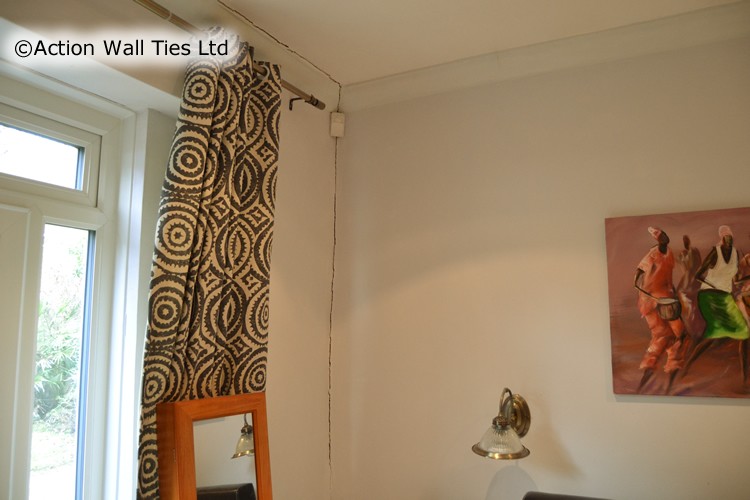
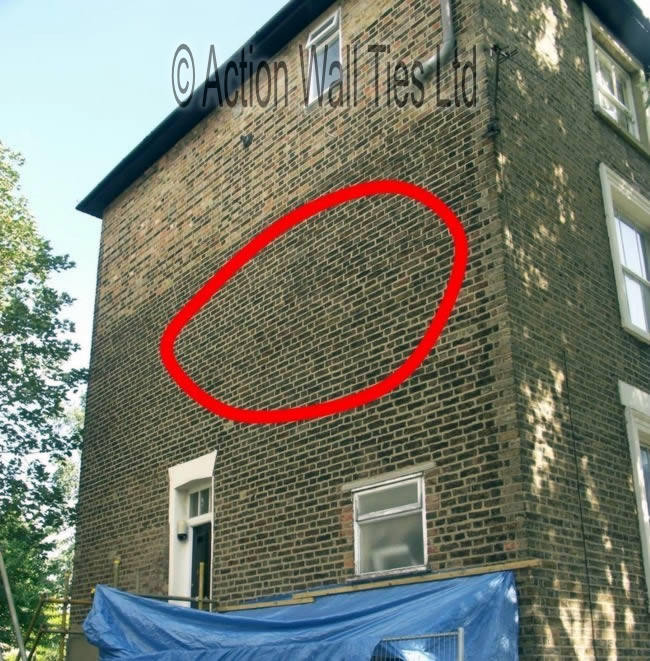

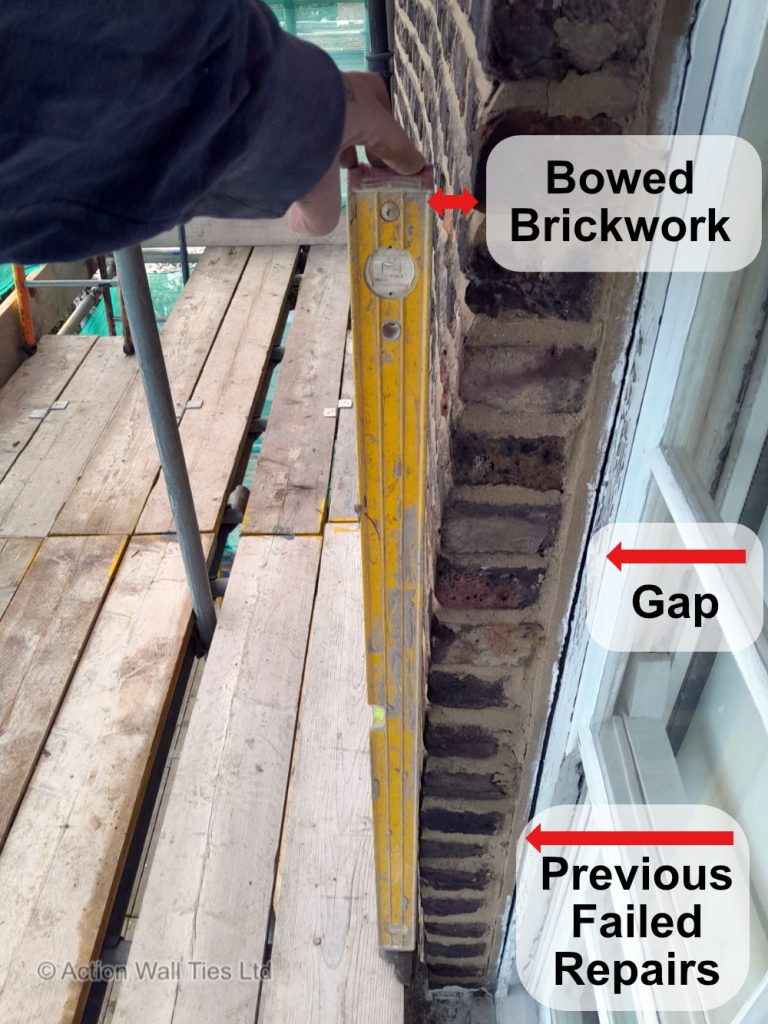
Bowing or bulging may develop gradually, and the early signs are easy to miss or dismiss. By the time the movement is obvious from the street, the wall has already been shifting for some time.
Have an AWT survey carried out if you notice any of the following:
Any of these symptoms warrants a professional assessment. Bowing walls do not stabilise on their own.
South London’s housing stock covers a long sweep of construction history, and bowing walls occur across all of it and for overlapping reasons.
For solid brick properties, such as the Victorian and Edwardian properties found across South London, the most common cause is inadequate restraint. This may be due to deficiencies in the original building work or due to failures as the brickwork ages, such as de-bonded brickwork.
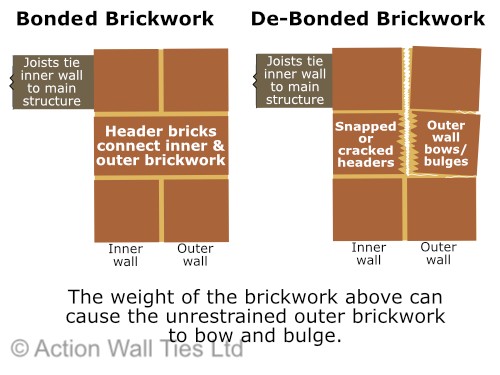
Across the Victorian terraces of South London, gable/flank wall bowing is one of the most common structural referrals AWT receives from surveyors and structural engineers.
Gable and flank walls, the large, uninterrupted side walls of terraced and semi-detached houses are particularly vulnerable. They lack window openings that would otherwise provide intermediate restraint, and they are often exposed to prevailing weather on their outer face.
For cavity wall properties, from the 1920s through to the 1980s, the most common cause is failure of the original metal wall ties. With age and corrosion, the wall ties lose the ability to hold the inner and outer leaves of the cavity wall together. Without the proper restraint, the outer leaf of brickwork, now effectively freestanding, begins to bow outward under its own weight. We offer Cavity Wall Tie Replacement & specialist repairs.


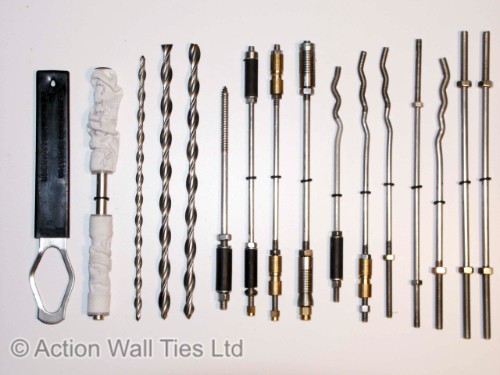
In South London’s post-war low-rise blocks, inadequate wall tie density at the time of construction, below what is now understood to be the minimum, means walls that appeared stable for decades are now showing movement as the original wall ties approach the end of their service life.
The low-rise blocks of flats can also suffer from bulging or bowing brickwork due to concrete boot lintel issues, a lack of expansion joints or concrete frame shortening.
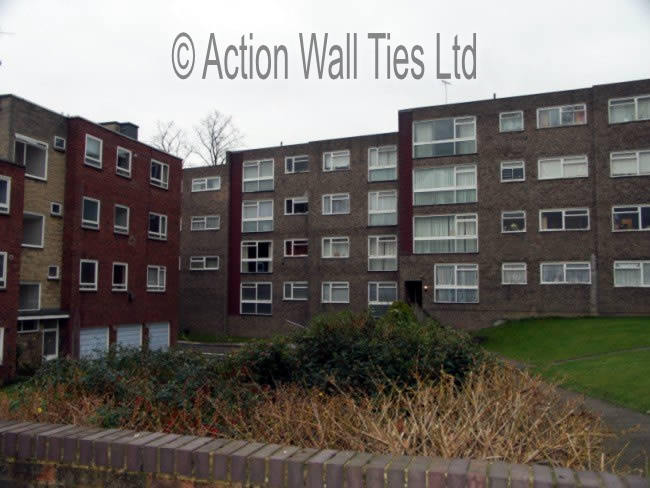

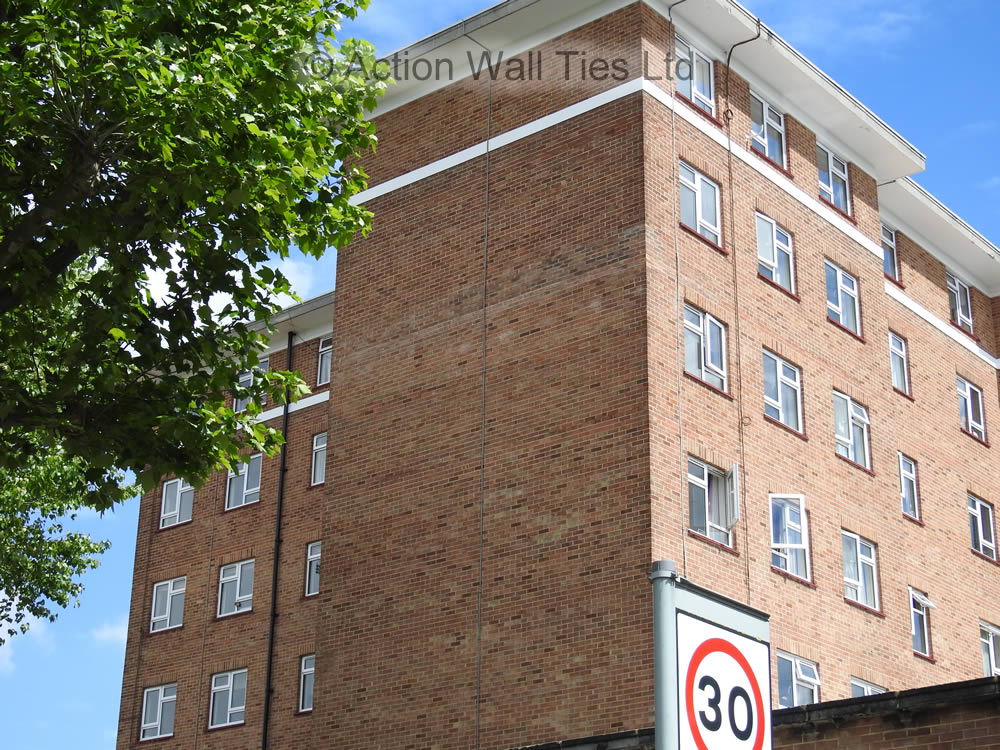
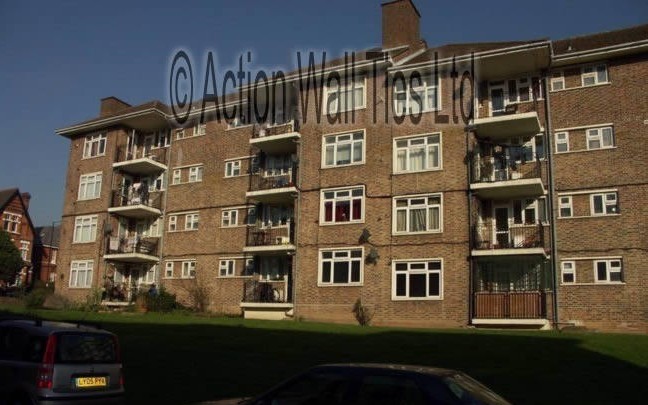
Other causes include thermal and moisture movement, loss of restraint at floor or roof level, and the removal of internal elements that previously provided lateral support to the wall.
AWT does not apply a standard fix. Every bowing wall repair begins with a survey – a physical assessment of the wall, the cause of the movement, the extent of the bow, and what is needed to stabilise it permanently.
The survey report sets out findings and recommendations clearly, including costs.
Book your no-obligation, free survey today.
In many cases AWT can provide free advice, without a site visit, based on photos of the structural faults. Send us photos of the defect using our contact form or email us.
Depending on what the survey establishes, AWT’s repair methods for bowing walls include:
The aim is always the same: permanent stabilisation of the original masonry without unnecessary demolition or rebuilding.
Decades of experience mean something when the person assessing your wall has seen the same defect in a hundred different properties across South London. AWT’s surveyors are not generalists.
They work in this discipline every day, which is why they can identify the root cause of bowing quickly and accurately, and why the repair specification they produce is right for your property, not a generic response.
AWT’s quality assurance covers three things that matter to South London homeowners:
S. Epstein of Ebco, a high-end contractor who has worked with AWT across multiple client properties, describes what distinguishes AWT as ‘the quality and care of the workmanship and an ability to find innovative solutions to complex problems that have saved clients both time and money’.
That is the standard AWT applies to every bowing wall repair in South London.
AWT covers all South London postcodes for bowing wall surveys and repairs. Properties seen regularly include:
Not listed? Call 01227 721255 – AWT covers all South London postcodes.
A bowing wall survey regularly uncovers related masonry defects that would continue to cause problems independently. AWT identifies and resolves all of the following:
Resolving all identified defects in a single programme of work reduces scaffolding cost, minimises disruption and eliminates the need for a return visit.
If a wall on your South London property is showing signs of bowing, bulging or movement, the right step is a survey by a specialist. AWT’s surveyors will assess the full extent of the defect, identify the root cause and provide a clear written report with recommended works and costs.
Call: 01227 721 255
Email: enquiries@actionwallties.co.uk
Or use the contact form on the Contact Us page. AWT covers all South London postcodes and will arrange a survey at a time that suits you.
To see some examples of our work and read our customer stories CLICK HERE