Action Wall Ties 25+ Years Experience Replacing Wall Ties
Replacement Wall Ties, and Installation of Additional Wall Ties In Cavity Walls In Kent To Ensure Structural Stability. Benefit From Our Specialist Tools & Trained Expert Team.
Wall Tie Replacement Kent
Cavity wall ties hold the two leaves (the inner and outer walls) of a cavity wall together. When the wall ties corrode, they expand, and that expansion splits bed joints, cracks brickwork, and can cause the outer leaf to bow outward.
Cavity wall tie failure is a progressive defect. Left unaddressed, it gets worse, and the repair becomes more extensive and more expensive.
Action Wall Ties has carried out wall tie replacement across Kent for more than 25 years. The company’s 01227 Canterbury dialing code is not a coincidence – this is home territory.
From Thanet and Canterbury to Medway, Maidstone, Folkestone and the Weald, AWT’s surveyors and specialist contractors know Kent’s housing stock well and carry out wall tie surveys and remedial wall tie installations every week.
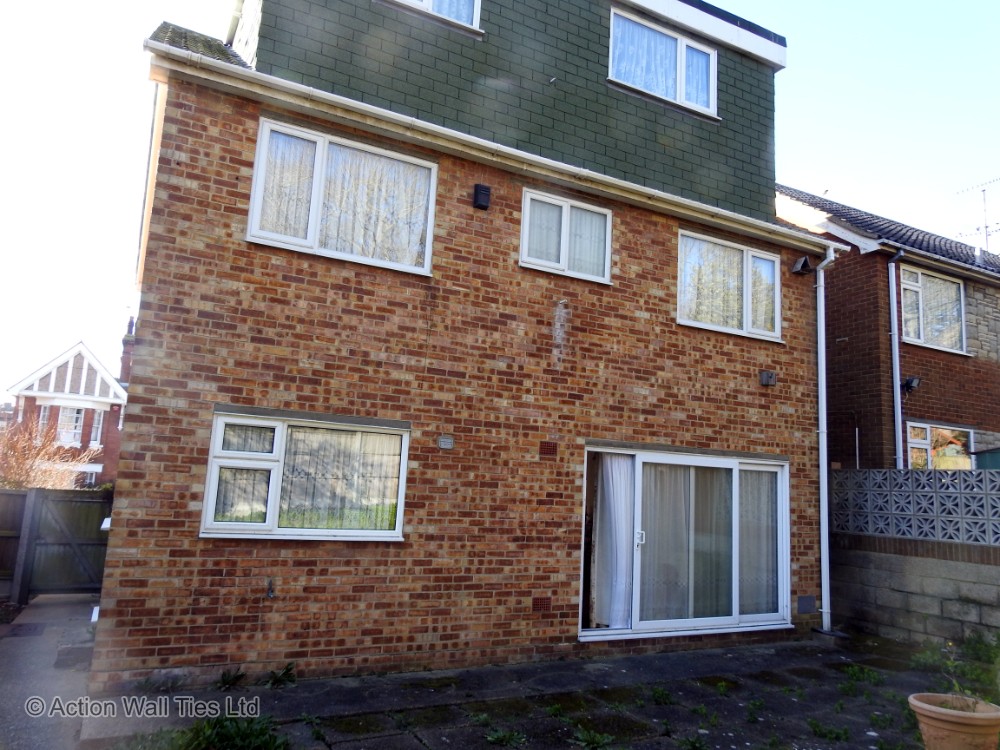
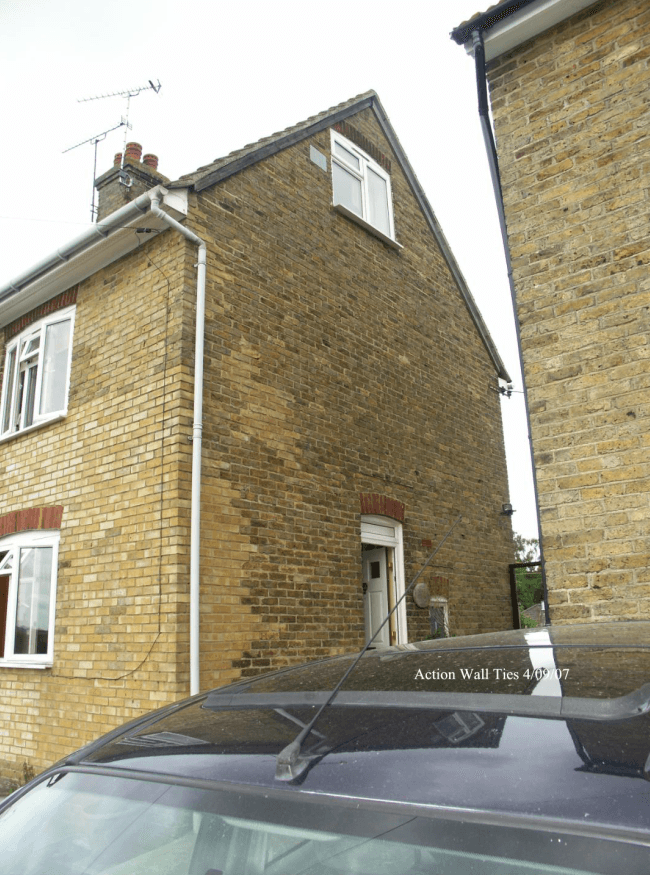
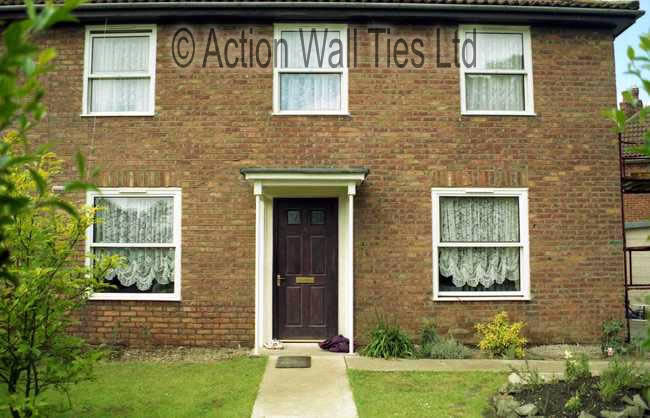
Failing 60s/70s Wall TiesFailing Wall TiesBowing Due to Failing Wall TiesRemedial Work for Failing 1950s Wall Ties
Signs of Failing Cavity Wall Ties in Kent Properties
The difficulty with cavity wall tie failure is that you cannot see the ties themselves without opening up the wall.
What you see instead are the symptoms, the damage that corroding ties cause as they expand and force the surrounding masonry apart.
Call AWT for a wall tie survey if you notice any of the following:
Horizontal cracking running through mortar bed joints, typically at regular intervals up the face of the wall
Brickwork or render that is bowing or bulging outward, particularly on gable walls or large uninterrupted elevations
Cracks that are wider at certain floor levels and correspond with tie spacing in the original construction
Staining or rust marks tracking through mortar joints – a direct sign of corroding ties bleeding through
Internal cracking or plaster movement corresponding to the outer leaf defects
Bowing that is visible from the street
A surveyor or structural engineer has flagged suspected wall tie failure in a survey report
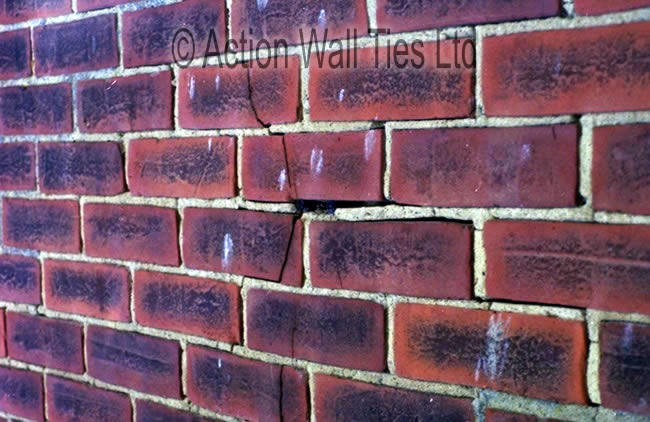
Cracked BricksDamage from Rusting Wall Ties
Not all of these symptoms confirm wall tie failure in isolation. Cracking and bowing occur for other reasons too. The good news is that an AWT survey will examine all areas of concern and identify the root causes.
Get a Free Estimate
Book your no-obligation, free survey today.
In many cases AWT can provide free advice, without a site visit, based on photos of the structural faults. Send us photos of the defect using our contact formoremail us.
Cavity construction became the standard for domestic and commercial buildings across Kent from the early twentieth century onward. The original mild steel ties used in properties built before the 1980s are the primary concern.
Moisture penetrates the cavity, the mild steel corrodes, and the expanding rust exerts pressure on the surrounding masonry, a process sometimes described as jacking.
The problem is particularly prevalent in certain types of Kent properties. Victorian and Edwardian terraces in Canterbury, Ramsgate, Margate and Folkestone were generally not built with cavities at all, but later conversions and extensions often used early mild steel ties.
Post-war housing across Medway, Maidstone, Sittingbourne and beyond used the butterfly and double-triangle tie patterns that are most susceptible to bi-metallic corrosion.
Social housing estates built between the 1950s and 1970s across Thanet and Swale used ties at densities that were later found to be inadequate.
Many of Kent’s properties are in coastal or near-coastal environments, which compounds the rate of corrosion.
Properties in areas such as Whitstable, Herne Bay, Faversham, Deal and Folkestone experience higher levels of airborne salt and moisture than inland locations, which accelerates the oxidation of mild steel ties and shortens the period before remedial action is needed.
Cavity wall tie failure is a progressive defect. Left unaddressed, it gets worse, and the repair becomes more extensive and more expensive.
The AWT Wall Tie Replacement Process
Wall tie replacement is not a one-method job. AWT begins every engagement with a thorough survey: a physical assessment of the property, the defects, the original tie specification and the extent of corrosion.
Our standard survey is free. If your property requires an additional endoscopic survey to view the condition of existing wall ties, this will incur a fee.
The survey report sets out what AWT found, what is causing it, and what the remedial works involve. No guesswork, no generic quotes over the phone.
The remedial wall tie installation process AWT uses across Kent properties involves:
Drilling through the outer leaf of brickwork at precise locations to reach the cavity wall ties
Removal or isolation of the original corroded ties where practicable
Installation of stainless steel remedial wall ties, resin-bonded or grouted depending on the masonry type and condition
Sealing drill holes to match the existing mortar profile and pointing colour
Where bowing has occurred, additional restraint measures to stabilise and, in some cases, partially realign the outer leaf
A completion report confirming tie type, installation pattern and coverage
AWT uses stainless steel ties throughout. They will not corrode. The installation is permanent.
Wall Tie Types Used by AWT in Kent
The choice of remedial tie depends on the specific property, the masonry type and the condition of the bed joints. AWT installs the following systems across Kent:
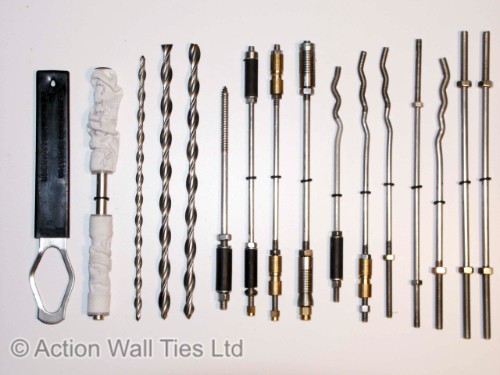
Resin-bonded stainless steel ties – the most widely used system, suitable for standard brick and block construction, providing a mechanically and chemically bonded fix through the full thickness of both leaves
Grouted ties – preferred where the inner leaf is a lightweight block or where cavity fill is present, using a grout injection to fully bed the tie
Lateral restraint ties – where the outer leaf has lost its connection to the floor structure or roof, additional restraints anchor the masonry back to the building frame
AWT’s Stainless Steel Wall Ties
AWT does not specify a single system across every job. The survey determines the right tie and the right installation pattern for each property.
Kent Areas Covered for Wall Tie Replacement
AWT covers all of Kent for wall tie surveys, wall tie replacement and related masonry repair. Key areas include:
Canterbury and East Kent – the home base for AWT’s operations, covering Canterbury city, the surrounding villages and rural properties
Thanet – Margate, Ramsgate and Broadstairs, where the concentration of Victorian and Edwardian terraces and the coastal environment create high demand
Medway – Rochester, Chatham, Gillingham and Rainham, covering the large stock of 1950s–1970s social housing and private housing
Maidstone and West Kent – Maidstone, Tonbridge, Sevenoaks and Tunbridge Wells
Folkestone and South Kent – Folkestone, Hythe, New Romney and the surrounding areas
Sittingbourne, Faversham and Swale – including the Isle of Sheppey
Herne Bay and Whitstable – coastal properties where tie corrosion rates are accelerated
Ashford and the Weald – covering the diverse housing stock across the High Weald and Low Weald
Deal, Sandwich and Dover – East Kent coastal and historic town properties
If your town is not listed, call 01227 721255. AWT covers all Kent postcodes.
Kent Property Types Where Wall Tie Failure is Most Common
Kent’s housing stock covers a wide range of ages and construction types. AWT has carried out wall tie replacement in all of the following:
Victorian and Edwardian terraced housing – particularly prevalent in Canterbury, Faversham, Margate, Ramsgate and Folkestone town centres
1930s semi-detached housing – the inter-war cavity wall construction where butterfly and double-triangle ties have reached the end of their service life
Post-war local authority housing – 1950s and 1960s estates across Medway, Thanet and Maidstone where tie density was often below current standards
Converted and extended older properties where additions used inferior tie specifications
Commercial and mixed-use buildings – offices, schools and retail premises across Kent’s town centres where failing ties represent a public safety risk
Listed and heritage buildings – where remedial works must preserve the original fabric; AWT has direct experience of wall tie work in all Grades of listed properties
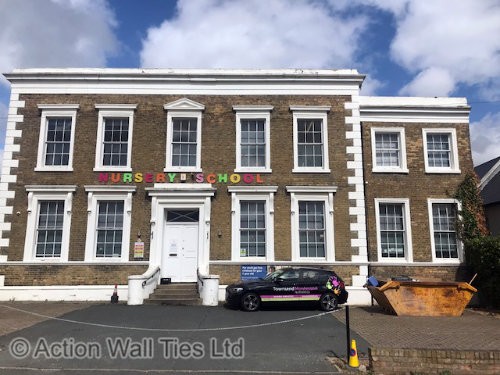
The Thanet Grade II listed nursery school is one example: facing a contractor recommendation to demolish and rebuild the facade, AWT completed the structural repairs in a matter of weeks with no business interruption.
Before – Cracks & Broken BricksFailed Wall TieAfter – Ready to PaintBulging & Cracking Masonry
Why Kent Property Owners Choose Action Wall Ties
AWT is not a general building contractor that offers wall tie replacement as one among dozens of services. It is a masonry specialist. Every surveyor and contractor on AWT’s team works in this discipline every day. That matters when the diagnosis is complex, when the cracking has more than one cause, when the property is listed, or when previous contractors have made the situation worse.
What AWT brings to every wall tie replacement job in Kent:
WTIF-registered contractor – independently verified competence in wall tie installation and masonry repair
Over 25 years of wall tie replacement experience across Kent, London, Surrey and Sussex
Canterbury-based operations – faster survey response across Kent than London-based competitors
Stainless steel ties only – no mild steel, no return visits for the same problem
Full survey report included – root cause analysis, recommended works and itemised costs
Works accepted by mortgage lenders and insurers
Directly employed surveyors and installation teams – no subcontracting of the specialist work
Ryan Perryman, a homeowner in Godalming, described what AWT did after another contractor had made the problem worse and recommended a full facade rebuild. AWT’s surveyor established the true extent of the problem on the first visit, completed the repair on time and on budget, and provided a guarantee for all works. That is what AWT does.
I was apprehensive when I first called AWT because another, purportedly qualified, company had walked away from our project after making things so much worse, informing us that the entire front of our Victorian home needed rebuilding….after a very thorough survey he informed us that the job was nowhere near as massive as we’d been led to believe. And despite the complexity of the structural repair they saved the day…. we got our house back looking beautiful and a guarantee for all works undertaken. AWT were professional, reliable and honest, and they got the job done right first time, on time and to the money. I would encourage anyone in a similar situation to choose AWT.
R. Perryman, Kent Homeowner
Related Masonry Defects AWT Resolves Across Kent
Wall tie failure rarely occurs in isolation. AWT’s surveyors regularly identify related defects during a wall tie survey that, if left unaddressed, would continue to cause problems regardless of the tie replacement:
Bowing and bulging walls, where tie failure has allowed the outer leaf to move outward and additional restraint is needed
Cracking and dropping brickwork, where the mortar bed damage from corroding ties extends into the structural brickwork
Cavity bridged with debris, which retains moisture, causing damp and accelerating corrosion
Failing lintels and arches are separate defects common in the same age of property, often identified during the survey visit
Corroded embedded mild steel, arch bars, boot lintels and support angles that have corroded for the same reasons as the ties themselves
Identifying and addressing related defects in a single programme of works reduces scaffolding costs, avoids return visits and resolves the building’s structural issues comprehensively.
Book a Wall Tie Survey Anywhere in Kent
If you have noticed horizontal cracking, bowing brickwork or a surveyor has flagged potential wall tie failure in a Kent property, the first step is a professional survey. AWT’s surveyors will assess the full extent of the problem, identify the root cause and provide a clear written report with recommended works and costs.
Call: 01227 721255
Email: enquiries@actionwallties.co.uk
Or use the contact form on the Contact Us page. AWT covers all Kent postcodes and will arrange a survey at a time that suits you.
To see some examples of our work and read our customer stories CLICK HERE